Michael’s Game: A Card Game for the Treatment of Psychosis
by Katie Coopersmith © 2017 Gifts for Card Players
We know by now that cards are good for a lot of things besides just entertainment. They can teach kids how to code, form substantial collections that can be traded and catalogued, and so much more. One of the most exciting new uses for cards, however, is one that many of us might not have ever imagined possible: cards as treatment for psychological difficulties.
Michael’s Game is a card game specifically designed to help healthcare professionals and patients understand and apply cognitive therapy for psychotic symptoms such as delusions, hallucinations, and lack of cognitive insight. Over 3% of the population will experience psychotic symptoms at some point in their life – which doesn’t sound like a lot, until you remember that there are about 7.5 billion people in the world right now, and 3% of 7.5 billion is still 225 million people! What’s more, although antipsychotic drugs can be incredibly effective and relieve suffering for a lot of people, many patients still experience residual symptoms that can interfere considerably with their daily lives.Thus, psychosis is pretty darn important for us to continue to try to understand and treat – and creative therapy ideas like this Michael’s Game are really exciting.
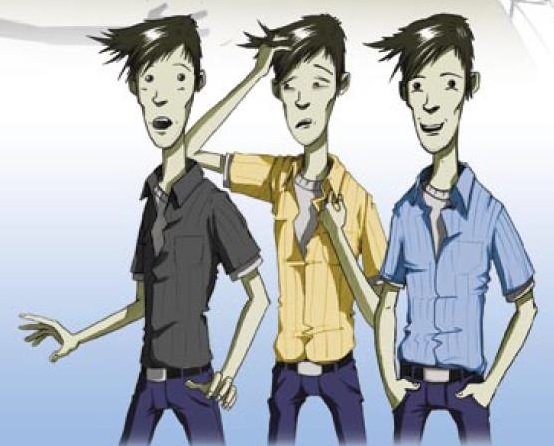
The one-to-one talking therapy known as cognitive behavioural therapy (CBT) has been shown to be a particularly effective treatment for psychosis, as it teaches patients to successfully manage their problems by changing their behaviour. “Michael’s game” was developed to help therapists and patients become familiar with CBT. Within the game, participants have to help “Michael” find alternatives to the wrong conclusions that he draws from the situations described on each card. (Source: ISRCTN)
You might be thinking, “sure, but why a card game?”. It certainly does seem a bit strange at first glance, but if we think about it, Michael’s Game actually sounds pretty similar to most other popular card games. In Michael’s Game, players have to make connections between beliefs, emotions, and behaviours … and other card games certainly also require us to make connections between different concepts!
Using games to treat psychological disorders isn’t a new idea, either. Rather, Michael’s Game stands on the shoulders of a long tradition of exploration into the ways in which gameplay can help change maladaptive thought patterns. For example, games have also been used to treat anorexia and schizophrenia through something called cognitive remediation therapy (CRT).
Michael’s Game isn’t just a potentially cool strategy; its effectiveness is actually backed up by science! Researchers pilot-tested the game and published a paper in 2011 summarizing their findings: Michael’s Game is indeed a useful tool for treating psychotic disorders! Patients who were treated using the game were found to have significantly reduced preoccupation and conviction towards their delusional ideas. They also had improved insight. Overall, approximately 45% of patients saw a clinically significant benefit as a result of playing the game.
One of the neatest things about Michael’s Game is that the people who administer it (generally health professionals) don’t need any prior training in cognitive therapy in order to use the game correctly! This means that the game can be used in a huge array of different contexts, and it could potentially help many, many people.
Aren’t cards amazing?!
Editor’s Note March 2026:
The above article was written in 2017. I often get asked where a person might be able to purchase the card game. Recently I did research through Gemini and here is the response:
“Michael’s Game” (also known by its original French name, Le Jeu de Michel) is a specialized therapeutic tool developed for use in clinical settings. Because it is a clinical intervention rather than a commercial board game, you won’t find it for sale at typical retailers like Amazon or local game stores.
According to the website you provided and recent clinical updates, here is how and where you can find it:
1. Specialized Distribution (HorizonSud)
The most direct way to obtain the game is by contacting HorizonSud, a Swiss psychosocial rehabilitation organization that manages its distribution.
-
Contact Email: info@horizonsud.ch
-
Source: The game is often provided to healthcare professionals who undergo a specific training workshop (usually lasting about 2 hours) to ensure they understand the Cognitive Behavioral Therapy (CBT) principles behind the cards.
2. Contact the Lead Researchers
The game was created by Dr. Yasser Khazaal and Jerome Favrod at Geneva University Hospitals (HUG) in Switzerland. Since they hold the research and development rights, you can reach out to them or their departments for information on professional access:
-
Affiliation: Department of Psychiatry, Geneva University Hospitals.
-
Email for Dr. Khazaal: yasser.khazaal@hcuge.ch
3. Professional Training and Workshops
Because the game is designed to help patients “train” their hypothetical reasoning to counter delusions and hallucinations, it is usually distributed through mental health networks and CBT training courses. If you are a healthcare professional, you may find the game through:
-
CBT Training Centers: Many European and North American psychotherapy training institutes use it as a teaching aid.
-
Research Repositories: You can view examples of the cards and the clinical manual on ResearchGate by searching for “Michael’s Game card examples.”
4. American Adaptations
In the United States, researchers have adapted the game for specific populations. For example, “Stephen’s Game” is an adaptation created by researchers at the University of Alabama (Dr. Lauren Kois) for use in competency restoration. You may reach out to their forensic psychology departments for information on that version.
Important Note: The creators and clinicians emphasize that the game is intended to be led by a trained facilitator (like a nurse, psychologist, or psychiatrist) in a group setting. It is generally not recommended for use as a “self-help” solo game without professional guidance.